ACCESS SERVICES · SUSPENDED SCAFFOLD
Suspended scaffold for FISP inspections and façade repairs
We hang each drop where your QEWI needs to look or a repair needs doing, and rig it to a written plan before anyone steps onto the stage.
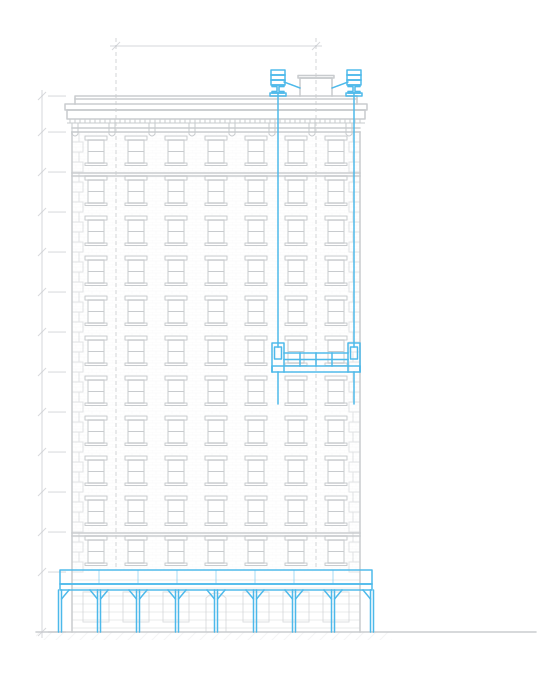
A suspended scaffold, or swing stage, hangs from the roof on wire ropes and puts a crew within arm's reach of any part of a tall façade. FISP requires hands-on inspections at intervals of no more than 60 feet along street-facing walls, and drones don't replace them. Banu plans the drops, rigs them under our own Special Rigger license as the law requires, and carries out the repairs from them.
The rules that apply
Close-up inspections. Your QEWI must inspect hands-on and close up, at intervals of no more than 60 feet, along every façade facing a public right-of-way. Drones can be used, but they don't stand in for the close-up inspections. How FISP repairs work →
Rigging. Hoisting and rigging outside a building must be done by or under the supervision of a DOB-licensed rigger. We hold our own NYC Department of Buildings Special Rigger license, so we rig the suspended scaffold we install and use.
Training. Anyone who installs, uses or removes a suspended scaffold needs the DOB 16-hour course and an 8-hour refresher every four years.
Sources: 1 RCNY 103-04 and DOB's FISP FAQ; NYC Administrative Code §28-404; NYC Building Code §3314.4.5.4.
What we deliver
-
Drops planned around the inspection.
We pick the locations with your QEWI, so every 60-foot interval and every reported condition is within reach.
-
Repairs from the same rig.
Simple fixes get done while the drop is up, so nobody has to rig the same spot twice.
-
The roof left the way we found it.
Boards and pads under the outriggers and counterweights, and photos before and after.
-
Neighbors asked early.
Access agreements go out at the start, long before they could hold up the schedule.
The rig, in plain words
| Term | What it is |
|---|---|
| Outrigger | A beam on the roof that reaches out past the edge, so the scaffold hangs clear of the wall. |
| Counterweight | The weight on the back end of the outrigger that keeps it from tipping. |
| Tieback | A second line from the rig back to something solid on the building, so the rig stays put if anything shifts. |
| Parapet clamp | A clamp that hangs the rig from a parapet, used only where the parapet is confirmed strong enough to carry it. |
| Davit or roof anchor | Permanent steel on some roofs, built for hanging rigs. |
| Roof protection | Boards and pads under every piece of equipment, so the roof membrane isn't punctured. |
Services and capabilities
01 Plan
- A drop plan for every elevation, laid over your QEWI's inspection grid
- A rigging plan showing where each drop hangs, what holds it and how it's tied back
- A roof survey of parapets, anchors and tieback points
- Neighbor access and roof protection agreements
02 Rig and work
- Suspended scaffold installation, moves and removal under our own Special Rigger license (special rigging)
- Outriggers and counterweights where the roof has nothing to hang from
- Tiebacks to the building's structure or to permanent roof anchors
- Drops for QEWI close-up inspections, with a crew member on hand to sound and open up the wall when asked
- Façade repairs from the scaffold (façade restoration)
- Ropes, rigging and equipment checked every day
03 Close out
- The roof checked, and any damage repaired, before the rig comes off
- A drop log and photos for your QEWI's report
- Neighbor roofs handed back in the condition we found them
Questions about suspended scaffold
Can you set up drops for our QEWI's inspection?
Yes. Your QEWI has to do hands-on, close-up inspections at intervals of no more than 60 feet along every façade facing a street or sidewalk, and drones don't replace them. We work out the drop locations with your QEWI, set the days, and move the rig from drop to drop as the inspection goes.
Who's allowed to rig the scaffold?
Hoisting and rigging outside a building must be done by or under the supervision of a DOB-licensed rigger. We hold our own NYC Department of Buildings Special Rigger license, so we rig the suspended scaffold we install and use.
Does everyone on the scaffold need training?
The rule is that anyone who installs, uses or removes a suspended scaffold in New York needs the DOB 16-hour suspended scaffold course, with an 8-hour refresher every four years.
Why do we need our neighbor's permission?
Most tall Manhattan buildings, and plenty elsewhere, are attached to the building next door. A drop near the lot line may have to hang from, tie back to or swing past the neighbor. We ask for a license agreement early. If a neighbor refuses, New York's RPAPL §881 lets an owner ask a court for a license to enter. That takes time, so we open the conversation well before the schedule depends on it.
What happens when it's windy?
The crew comes down. Nobody works from our suspended scaffolds in storms or high winds, and the rig is secured so it can't swing into the wall. Our supervisor checks the conditions before work starts and keeps watching them through the day. Weather days go into the schedule from the start, especially for winter work.
Can repairs be made from the inspection drops?
Simple ones, yes: removing loose material, small patches and pointing, where your QEWI and the scope allow it. Larger repairs are scoped from the inspection report, then done from the same rig or from one set up for the repair.
Drops across the boroughs
- Manhattan: Attached buildings on tight blocks, where plenty of drops depend on the neighbor's roof.
- Brooklyn: Waterfront towers in Williamsburg and Greenpoint, where wind off the river can cut the working day short.
- Queens: Large co-op complexes with dozens of elevations apiece, where the drop plan is the schedule.
- The Bronx: Sloped sites along the Grand Concourse, where drop lengths change from one end of a façade to the other.
- Staten Island: About 140 FISP buildings last cycle, most of them on the hilly North Shore.
Let's talk about your building
Planning your QEWI's inspection?
Send us the address and your QEWI's contact. We'll work out the drops with them directly.