FAÇADE SERVICES · WINDOWS
Window replacement for occupied multifamily and commercial buildings
We put new windows in one apartment at a time and seal each one into the wall, because that joint is where windows leak.
Window replacement in a multifamily or commercial building means installing new windows unit by unit while people live and work inside. Whether they leak comes down to the joint with the wall: the sill flashing, the perimeter sealant and the lintel at the head. Banu replaces windows in occupied buildings and ties each one into the façade around it.
What we deliver
-
One planned visit per apartment.
The window goes in and the interior gets finished, on a schedule we set with your managing agent.
-
Windows sealed into the wall.
We check the head before each new window goes in, then set it on sill pan flashing with a continuous perimeter seal.
-
Façade repair and windows in one sequence.
Brick, lintel and sealant work happens while each window is out.
-
Residents who know the plan.
They get notices, a schedule by line and floor, and a contact on site.
-
Lifted under our own license.
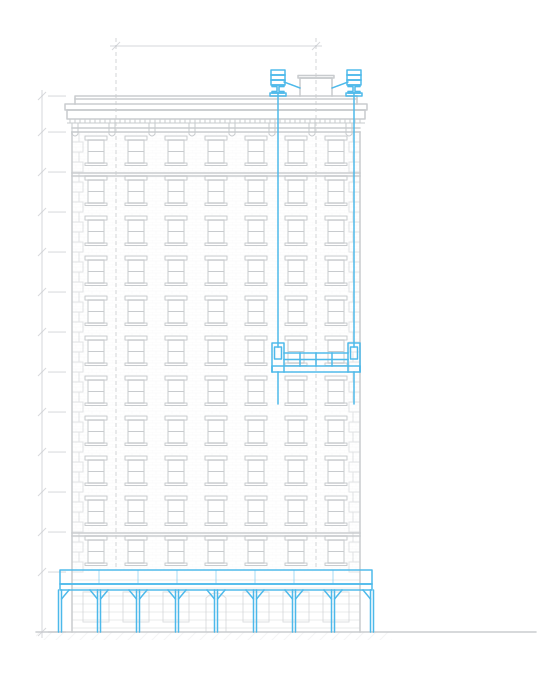
New windows go up the outside of the building in lifts of up to 2,000 pounds, and the drops at each line of windows are rigged under our own Special Rigger license.
Where new windows leak
The window itself is built and rated in a factory. The installation happens on your wall, and that's where the leaks start. Water gets in where the window meets the wall: a sill with no pan flashing, a perimeter joint sealed on one side only, or a head where a rusting lintel has cracked the brick above.
We check all three before we order. If the lintel at the head is rusting, we repair or replace it while the window is out, the one time the head is open.
Open the wall once
If your FISP report lists conditions around the windows, schedule the windows and the façade repairs together. One scaffold and one round of resident notices then cover both, and the brick and sealant work at each opening happens once. Where the whole wall is failing, treat the windows as part of a re-cladding project.
Services and capabilities
01 Survey and plan
- A window-by-window survey of frames, sills, heads and the brick around them
- Probes at window heads to check the lintels
- A schedule by line and floor, built with your managing agent
02 Replace
- Old windows and debris removed from occupied units
- Sill pan flashing and perimeter air and water seals
- Installation to the manufacturer's instructions and your architect's details, sealed inside and out
- Lintel repair or replacement while the window is out
- Brick and mortar repair around the opening
- Interior trim and finishing at each window
03 Close out
- Water testing of sample installations where specified
- Sign-off unit by unit with your managing agent
- Product warranties where the manufacturer issues one
Signs it's time for new windows
- Water stains or peeling paint under the windows after rain
- A draft with the window closed and locked
- Frames that are rotted, rusted or bent, or sashes that won't open
- Sealant around the outside of the frame that's cracked or missing
- Cracked brick or rust stains above the window head
The rules that apply
Landmarks. LPC regulates window replacement on individual landmarks and on buildings in historic districts, so you need an LPC permit before work starts. Its rules treat primary and secondary façades differently. On a primary façade, new windows generally have to match the historic windows' configuration, details and finish. LPC says the majority of window replacement proposals meet the requirements for staff-level approval. Landmark restoration →
Source: Landmarks Preservation Commission, Windows Fact Sheet (updated November 20, 2024), nyc.gov/lpc.
FISP (Local Law 11). Cracked brick at window heads, rusting lintels and failed sealant are common FISP conditions. We fix them while the windows are out and the openings are exposed. FISP repairs →
Questions about window replacement
Do residents have to move out while the windows are replaced?
No. We work unit by unit and plan about one day per apartment for the window itself, with interior trim and finishing right after. Residents clear the area in front of each window and give us access on their scheduled day. We set the schedule with your managing agent and send notices ahead of time.
Can windows be replaced in winter?
Yes, within limits. We take out only as many windows as we can close the same day, and each apartment stays protected while its opening is exposed. Sealants and mortar need minimum temperatures to cure, so the exterior finishing gets planned around the weather.
Should we fix the façade or replace the windows first?
Do them together if you can. Window heads, sills and the brick around them often show up in the FISP report anyway. With one scaffold and one round of resident notices, the wall around each window gets opened and closed once.
Do we need Landmarks approval to replace windows?
If the building is an individual landmark or sits in a historic district, yes. LPC regulates window replacement there, and on primary façades new windows generally have to match the historic windows' configuration, details and finish. According to LPC, most proposals meet the requirements for staff-level approval. Your architect files the application.
Who chooses the new windows?
Your architect or engineer specifies them, and you weigh in on look and operation. We provide product data, shop drawings and samples, and we raise lead times early, because windows for a whole building are made to order.
Windows across the boroughs
- Manhattan: About 1,665 lots with buildings of seven or more floors sit in historic districts, so many window projects start with an LPC permit.
- Brooklyn: Newer towers where the window sealant is often the original.
- Queens: Post-war brick co-ops, where hundreds of matching windows sit under steel lintels of the same age.
- The Bronx: Large Art Deco windows in the Grand Concourse Historic District.
- Staten Island: North Shore apartment buildings in St. George, Park Hill and Grymes Hill.
Let's talk about your building
Planning new windows?
Send us the address and your last FISP report, and we'll tell you what to coordinate before you place the order.