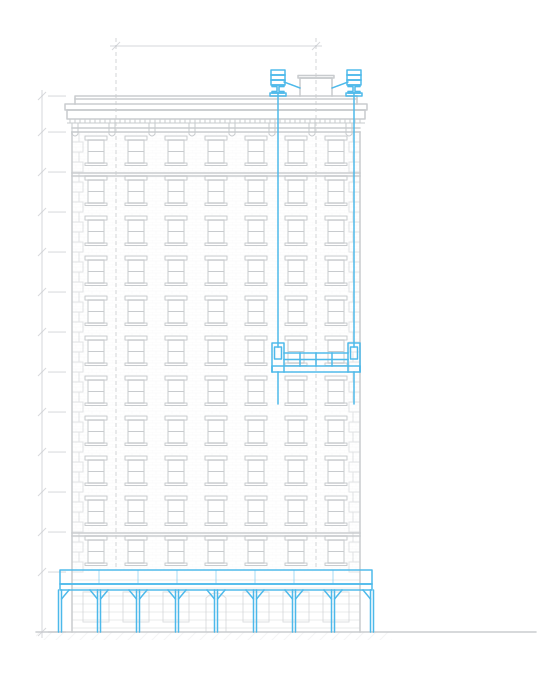
LANDMARK SERVICES · CORNICES
Cornice repair: made safe first, then restored
We secure the cornice over your sidewalk first, then restore it to the profile it was built with.
A cornice is the projecting crown along the top of a building, built in sheet metal, stone or terra cotta, or in GFRC on newer repairs. It hangs over the sidewalk from the highest point of the wall, so a failing cornice is a common Unsafe finding. Banu stabilizes it first. Then we repair and re-anchor what can be saved, and replace the rest in kind.
What we deliver
-
The sidewalk protected first.
If pieces could fall, we secure the cornice and protect the people below before any other work starts.
-
Eyes on the frame and anchors.
We open the cornice to see what's holding it up, because a sound-looking skin can hide a rusted frame.
-
Repairs that match the original.
Profiles, seams, ornament and paint matched to what's there, and replacement sections made in kind.
-
Drops at the cornice line.
We rig them under our own Special Rigger license, from outriggers where the cornice itself can't carry anything.
How cornices fail
- Sheet metal (galvanized steel or copper): A formed metal skin over a steel or wood frame. Water gets in through open seams or a failed top cap, the frame and anchors rust or rot, and sections start to sag or pull away.
- Stone: Projecting blocks held in place by the masonry above and by metal anchors. As the anchors rust they jack the stone, and the projecting edges crack.
- Terra cotta: Hollow glazed units hung on steel anchors. They fail the same way the rest of a terra cotta façade does.
- GFRC: A lighter cast material used in many past replacements. It relies entirely on its frame and anchors.
Why cornices show up as Unsafe
A cornice projects over the sidewalk from the top of the building, and everything holding it up is hidden inside. A section can look fine from the street while the steel behind it has rusted through. When your QEWI finds loose pieces, displacement or failed anchors, the condition is often filed Unsafe. Unsafe façade repairs →
Services and capabilities
01 Stabilize and investigate
- Make-safe work: loose pieces removed or secured
- Temporary bracing as your engineer directs
- Inspection openings at the framing, outriggers and anchors, with the profiles recorded
02 Repair or replace
- Sheet metal seams repaired and patched, with new top caps
- New framing, outriggers and anchors in stainless or galvanized steel
- Stone patching, pinning, dutchman repairs and re-anchoring
- Replacement sections in kind: copper, galvanized steel, stone or terra cotta
- GFRC and other substitutes where your architect specifies them and, on landmarked buildings, LPC approves
- Sheet metal painted and coated
03 Close out
- Photo documentation for your QEWI's amended filing
- Documentation for LPC sign-off where required
- A maintenance plan for the seams, caps and paint
Signs your cornice needs attention
- A sagging or wavy line along the top of the building
- Rust streaks running down the wall below the cornice
- Open seams, missing pieces or bare metal on a sheet metal cornice
- Cracked or missing stone or terra cotta at the cornice line
- Pieces of metal or stone on a lower roof or the sidewalk
If anything looks ready to fall, say so when you request an assessment, and we'll start by making it safe.
The rules that apply
FISP (Local Law 11). An Unsafe filing means the public is protected immediately and the condition is corrected within 90 days of filing. Extensions of up to 90 days are available on application, with a $305 fee and supporting documentation.
Landmarks. On a landmark or in a historic district, cornice work needs an LPC permit before it starts. Replacing a cornice in a different material needs LPC approval, and the Commission decides whether the substitute is acceptable. Landmark restoration →
Questions about cornices
Our QEWI filed the cornice Unsafe. What happens now?
The public has to be protected right away, usually with a sidewalk shed, and the condition corrected within 90 days of filing unless an extension is granted on application. We make the cornice safe first. Then we open it up to see the frame and anchors, so the repair is scoped on what's there.
Can we just take the cornice off?
On a landmark or in a historic district, only with LPC approval, since any exterior work there needs an LPC permit first. Elsewhere it's an option your architect or engineer can assess. Removal changes the look of the building for good, so we scope a repair alongside it and you can weigh the two.
Is a sheet metal cornice worth repairing?
Usually, if the frame can be fixed. The skin is often in better shape than it looks from the street, and new sections can be formed to the old profile. Where the framing and anchors have rusted through, we rebuild the cornice on a new frame and reuse what's sound.
Copper or galvanized steel?
Usually whatever the original was, especially on a landmark. Copper lasts longer; galvanized steel needs paint. Wherever copper meets steel framing or fasteners, we separate the two, because the steel corrodes at the point of contact.
Can GFRC replace a stone or terra cotta cornice?
It can be molded to match and weighs far less, which helps when the wall behind it is weak. On a landmarked building LPC decides whether the substitute is acceptable; elsewhere your architect makes that call. GFRC is only as good as its frame and anchors, so we give those as much attention as the castings.
Cornices across the boroughs
- Manhattan: Pre-war cornices across the Upper West and Upper East Sides, often the most exposed element on the building.
- Brooklyn: Sheet metal cornices on the rowhouses of Brooklyn Heights and the borough's other historic districts.
- Queens: Cornices on Jackson Heights garden apartments, which need LPC permits even below the FISP threshold.
- The Bronx: Cornices on the 1920s apartment houses along the Grand Concourse.
- Staten Island: Older houses and institutional buildings in the St. George/New Brighton Historic District.
Let's talk about your building
Worried about your cornice?
Cross the street, photograph the whole cornice line and send the pictures with your request. A clear set of photos tells us most of what we need for a first look.