ROOFING SERVICES · ROOF REPLACEMENT
Flat roof replacement and recovery
We core the roof before we recommend anything, then build a new one flashed into the parapet and pitched to its drains.
Replacement takes the old roof down to the deck and builds a new assembly from there. Recovery puts a new roof over the existing one, where the code and the roof's condition allow it. Banu Construction makes that call with core cuts and a deck check. The new roof then goes on with the parapet flashing, drains and bulkheads detailed into it from the start, because the edges are where flat roofs usually let go.
What we deliver
-
A recommendation you can check.
You see the cores, and what's under the membrane, before you choose between recovery and tear-off.
-
Edges built to stay dry.
Flashing and coping tied together at each parapet, bulkhead and curb.
-
Water that drains off.
Tapered insulation and drain work take the ponding out of the new roof.
-
Roofing hoisted under our own license.
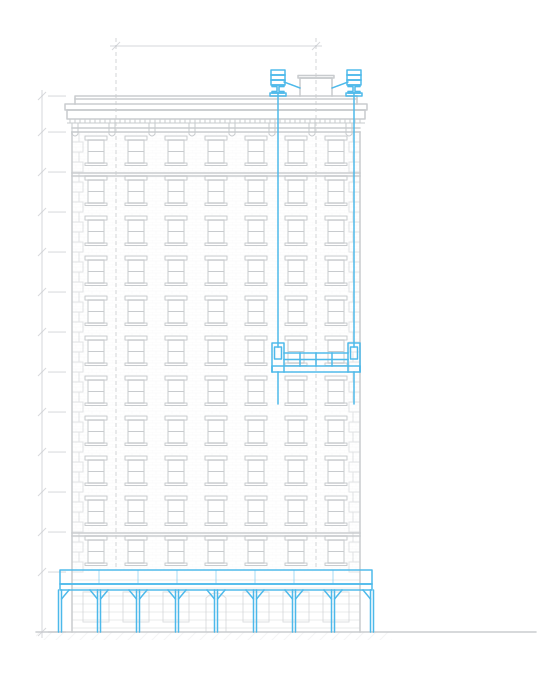
We hoist roofing materials up the outside of the building, in lifts of up to 2,000 pounds, under our own Special Rigger license.
Recovery or tear-off?
| What we check | What it tells you |
|---|---|
| Core cuts | How many roofs are already on, and what they're made of |
| Moisture readings | Whether the insulation is wet. Wet insulation comes out. |
| Deck condition | Whether the deck needs repair first |
| Drains and slope | Whether ponding needs tapered insulation or drain work |
Wood or concrete deck. Older low-rise and mid-rise buildings often have wood decks; larger buildings usually have concrete. A long-running leak rots wood, so once the old roof is off we replace the damaged sections. Concrete gets patched. The deck type also decides how the new roof is fastened down.
Parapets and bulkheads. Most top-floor leaks start at the edges: flashing pulled away from the parapet, coping joints opened up, a cracked bulkhead wall. New flashing goes in with the new roof and ties into the coping, and the bulkhead repairs are part of the same job.
Services and capabilities
01 Investigate
- Roof survey with core cuts and moisture readings
- A check of the drains, slope and deck
- Asbestos testing by a licensed firm before tear-off
02 Replace or recover
- Tear-off to the deck, or recovery where the code and conditions allow
- Wood decks repaired or replaced, concrete decks patched
- Tapered insulation and membrane, installed to the manufacturer's requirements
- Base flashing, counter-flashing and coping at parapets
- Replacement drains, and new drains where the roof needs them
- Bulkheads, curbs, hatches and skylights
- Solar-ready and green roof assemblies, with protection and drainage layers
03 Close out
- Manufacturer inspection and warranty, where the manufacturer issues one
- Photos of each layer before the next one covers it
- Maintenance notes for your super
Signs your roof needs replacing
- Top-floor leaks showing up in more than one place
- Water still standing two days after rain
- Blisters, splits, open seams, or patches on top of patches
- Soft, spongy spots underfoot
- A roof that was already laid over an older one
The rules that apply
Recovery limits. The code bars a recover where the existing roof is water-soaked or too deteriorated to serve as a base, where the existing covering is slate, clay, cement or asbestos-cement tile, or where the roof already has two or more applications of roof covering (BC §1511.3).
Reflective roofs. Low-slope roof coverings must meet minimum solar reflectance and thermal emittance values (BC §1504.9). That applies whether you recover or replace, unless the area is under 50 percent of the roof and under 500 square feet (BC §1511.1). Areas under a green roof are exempt.
Solar and green roofs. Under Local Laws 92 and 94 of 2019, work that replaces an entire existing roof deck or roof assembly must provide a sustainable roofing zone covered 100 percent by solar, a green roof or both. Exclusions include Fire Code access areas and rooftop equipment.
Parapets. A parapet facing the street needs a Local Law 126 observation every year, at any height. Whatever that observation flags, the roof replacement is the time to fix it.
Sources: 2022 NYC Building Code, Chapter 15; DOB Buildings Bulletin 2019-010; nyc.gov/site/buildings/codes/ll92-solar-green-roofs.page. Your architect or engineer confirms how they apply.
Questions about roof replacement
How do we know if our roof can be recovered?
We take core cuts. Each one is a small sample that shows how many roofs are already on the building and whether the insulation under them is wet. The NYC Building Code rules out a recover over a water-soaked or badly deteriorated roof, and over two or more existing roof coverings. If yours is any of those, the roof comes off to the deck.
Does replacing our roof mean we need solar panels or a green roof?
It can. Local Laws 92 and 94 of 2019 apply when the work replaces an entire existing roof deck or roof assembly, and then the roof's sustainable roofing zone needs solar, a green roof or both. Your architect or engineer confirms whether your scope triggers it. We build the roof to suit.
Do you test for asbestos before tear-off?
Yes. Older roofing materials can contain asbestos, so a licensed firm tests the existing roof before anything comes off. If they find it, a licensed abatement contractor removes it first, and the roofing starts after that.
Do we get a manufacturer warranty?
Yes, where the manufacturer issues one for that system on your project. We install to the manufacturer's requirements and arrange their inspection. Terms differ from one system to the next, so our proposal spells out what's available for your roof.
Can the building stay occupied during a roof replacement?
Yes. We open only as much roof as we can close up watertight the same day, and keep temporary protection on the roof in case the weather turns. Tear-off is loud, so top-floor residents get notice before it starts.
Roofs across the boroughs
- Manhattan: Attached buildings, where getting onto the roof often means working it out with the building next door.
- Brooklyn: Setback and roof-edge flashing on towers built since 2000.
- Queens: Large co-op and rental complexes, where one roofing standard has to hold across many roofs.
- The Bronx: Large planned complexes, where a roof program can run across dozens of buildings.
- Staten Island: Storefront buildings, where the joint between roof and parapet is usually behind the top-floor leaks.
Let's talk about your building
Before you replace the roof
Let us core it first, so the decision rests on what's under the membrane. Tell us where the water shows up.