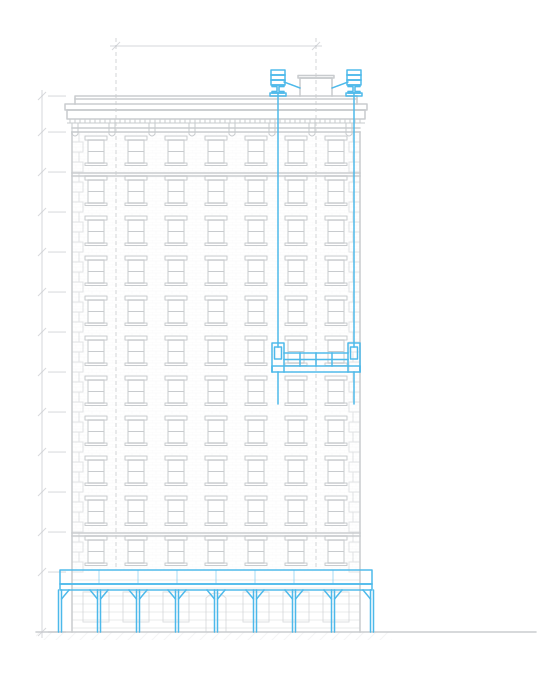
Façade Restoration · FISP / Local Law 11 · General Contracting
New York's façades, restored to Safe.
We restore and repair New York buildings: façades, Local Law 11 repairs, parapets, roofs, structural work and general contracting. We rig the access ourselves under our own Special Rigger license and plan the job around your DOB filing deadline.
It starts with your QEWI's report and your building's DOB history.
Each condition in the report gets its own line in the scope and its own slot on the schedule.
Sheds, fences and scaffold drops go up wherever the public needs protecting.
Brick, stone, terra cotta, steel, parapets and roofs, repaired to your engineer's details.
We walk the finished work with your QEWI and hand over the photos and paperwork for the amended filing.
The part everyone's waiting for. We plan for it on day one.
Serving NYC: Manhattan · Brooklyn · Queens · Bronx · Staten Island · Long Island
Banu Construction restores and builds across New York: façade restoration and Local Law 11 repairs, landmark masonry, roofing, structural steel, concrete and balconies, plus general contracting and interiors. We hold our own NYC Department of Buildings Special Rigger license, so we plan and rig the access ourselves, and we're certified MWBE by New York State and New York City. We work alongside the architects and engineers who design and inspect each building. More about Banu →
The clocks you're on
Most buildings we're called to are up against more than one city deadline at once. These four matter most right now.
-
Feb 21, 2027
Sub-cycle 10A filing window closes for blocks ending in 4, 5, 6 or 9.
Source · nyc.gov -
90 days
To correct an Unsafe condition after the report is filed.
Source · nyc.gov -
90 days
How long a sidewalk shed permit lasts now. Every renewal needs a progress report.
Source · nyc.gov -
2 years
To finish Unsafe repairs from the first shed permit, for sheds first permitted on or after January 12, 2026. Construction documents are due at 5 months and the permit application at 8.
Source · nyc.gov
What we do
Seven lines of work under one team, with one point of contact for the whole building.
- 01 Façade Restoration & Exterior Renovation Full façade rehabilitation from parapet to sidewalk, plus re-cladding, new windows and façade upgrades when a repair won't hold.
- 02 Local Law 11 / FISP Repairs SWARMP and Unsafe conditions, parapets, and getting your shed down.
- 03 Landmark & Historic Restoration Terra cotta, cornices, cast iron and stone, matched to the original.
- 04 Roofing & Waterproofing Roofs, coping, flashing and sealants, where the water gets in.
- 05 Structural, Concrete & Balconies Steel, lintels, columns, balconies, garages and sidewalks.
- 06 Access, Scaffolding & Sidewalk Sheds Suspended scaffold rigged under our own Special Rigger license, plus sheds and site safety.
- 07 General Contracting & Interiors Lobbies, interiors and building upgrades, alongside the façade work or on their own.
We join your building at any point
-
Before the inspection.
Your QEWI needs scaffold drops for the close-up inspections, and you need to know what's coming. We rig the drops ourselves and fix the problems you already know about, so they're repaired before they're reported.
-
Right after the report.
Send it over. We walk every condition with the report in hand and scope each one separately, so you can follow every repair through to sign-off.
-
Unsafe today.
Protection goes up first, then a repair plan that fits the 90-day window. Check the Unsafe box on the assessment form and attach the report.
-
Mid-project.
A job stalled, or a contractor walked off. We verify what was done, document what wasn't, and finish it.
One team from the first probe to the shed coming down
-
Read the report and the building.
We go through your FISP report, your DOB filing history and any open violations, then walk the building ourselves.
-
Scope it line by line.
Each condition gets its own line in the scope. For what nobody can see yet, like how many bricks have let go behind the face, the scope says how we'll find it, count it and photograph it.
-
Protect and get access.
Shed, netting or scaffold, with the scaffold rigged under our own Special Rigger license. We line up permits and neighbor access before the first drop.
-
Restore.
We build the repairs to your engineer's details and check each drop before we move to the next.
-
Sign off and take it down.
We walk the finished work with your QEWI, hand over photos and documentation for the amended filing, and take the shed down once the city allows it.
How we keep you informed
- A project lead you can reach from the first walk-through to close-out.
- Photo updates at key milestones.
- Changes talked through with you before added work goes ahead.
- Close-out photos and records of the repairs, for your QEWI and your files.
When is your FISP deadline?
FISP covers buildings greater than six stories. Enter your tax block number: the last digit sets your Cycle 10 sub-cycle.
Don't know your block number? Look it up by address →
Planned around how your building runs
- Several buildings, one schedule.
- We plan the work across sub-cycles A, B and C and write progress updates you can forward as they are.
- A scope you can present.
- Each condition is listed and tied to your filing date. It's clear enough to take into a shareholder meeting.
- Work around tenants and storefronts.
- We sequence repairs around occupied floors and retail frontage, and give you straight answers on risk and on how long the shed stays up.
- Built to the drawings.
- We ask before we improvise, and we document the work the way your engineer or QEWI needs it to file.
- Planned around operations.
- We write the phasing plan around how the building runs and supply the insurance certificates and paperwork a procurement office can follow.
What stands behind the work
A rigging license of our own.
We hold our own New York City Department of Buildings Special Rigger license. The drops we hang are planned and moved by the same people doing the repairs. How our rigging works →

Questions we hear often
Who does the FISP inspection, and who does the repairs?
Your QEWI, a New York State licensed architect or engineer with at least seven years of façade experience, inspects the building and files the report. We rig the scaffold drops for the close-up inspections under our own Special Rigger license. Then we make the repairs the report calls for and hand your QEWI the photos and records they need to file the amended report.
Our engineer just filed Unsafe. How fast can you start?
Send the report through the assessment form and check the Unsafe box. Protecting the public comes first. Then we walk the building with your QEWI's report and give you a repair plan that fits inside the 90-day correction window, or one that supports an extension request if the scope needs more time.
How long will our sidewalk shed be up?
As long as the repairs take, and we plan the work to keep that short. For sheds over an Unsafe façade first permitted on or after January 12, 2026, the city now requires construction documents filed within 5 months, a permit application within 8 months and repairs finished within 2 years. We build the schedule backward from those dates and take the shed down section by section where DOB allows.
Can you work on a landmarked building?
Yes. Exterior work on an individual landmark or in a historic district needs a Landmarks Preservation Commission permit before it starts. We work with your architect on the application, and on the material matches and mockups LPC asks to see.
Where do you work?
All five boroughs (Manhattan, Brooklyn, Queens, the Bronx and Staten Island) and Long Island.
Let's talk about your building
Talk to us about your building
Send the report, the violation or a few photos of the wall. We'll walk it with you and lay out what it needs.