FAÇADE SERVICES · LINTELS
Lintel and shelf angle repair: the steel behind the cracked brick
Cracked brick over a window usually starts with the steel behind it. We repair the steel along with the brick, so the crack has no reason to come back.
Lintels carry brick over windows. Shelf angles carry it at each floor line. When that steel rusts it swells and cracks the brick around it, which masons call rust jacking. Banu opens the wall and repairs or replaces the steel as your engineer specifies. Then we install new flashing and weeps and rebuild the brick to match.
What we deliver
-
Steel repaired before the brick goes back.
Each lintel and angle we expose is cleaned and coated or replaced, as your engineer directs, before we rebuild over it.
-
A way out for the water.
We install new through-wall flashing with end dams and weeps, so water that gets into the wall can drain back out.
-
A plan for the steel you can't see yet.
Before we start, we agree how each extra lintel and each foot of shelf angle will be handled, unit by unit.
-
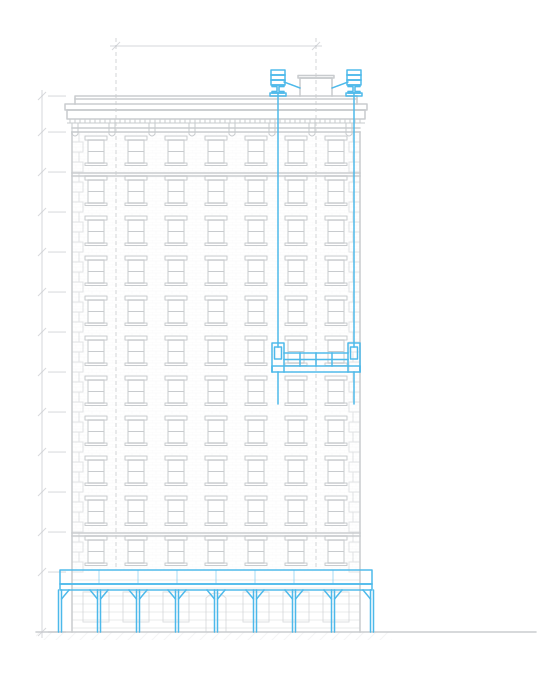
Drops at every lintel line.
We hang them under our own Special Rigger license and move them along the elevation as each opening is closed up.
How rust jacking works
In a lot of older buildings the steel was painted at best, and the flashing above it has failed or was never installed. Water gets in through open joints, runs down the back of the brick and sits on the steel. Rust builds in layers. Each layer pushes the brick up and out, until pieces can fall. Why rusting lintels crack brick →
How it shows up in a FISP report
The wording varies, but typical entries read like "cracked and displaced brick at lintel bearing," "corroded steel lintels with rust staining at window heads" or "horizontal cracking at shelf angle along floor line." Your QEWI classifies each one SWARMP or Unsafe. We scope and track each repair by its number in the report.
Working in an occupied building
Lintel work is loud, and it happens right at the window. We protect the windows from outside and let residents know before the work reaches their line. Any apartment visits get booked through your managing agent.
Services and capabilities
01 Investigate
- Your FISP report, read condition by condition
- Probes at representative lintels and shelf angles
- A survey of window heads and floor lines
02 Repair or replace
- Brick above the steel taken down and salvaged
- Cleaning, rust-inhibiting primer and coating where the steel can stay
- Replacement lintels and shelf angles in galvanized or stainless steel, as your engineer specifies
- New through-wall flashing with end dams and weeps
- Brick rebuilt to match, with masonry restoration on the surrounding wall
03 Close out
- Before-and-after photos of each opening, keyed to your report
- A record of the steel repaired and replaced, by location
- A walk-through with your QEWI for the amended filing
Signs your lintels or shelf angles are rusting
- Cracks running sideways from the top corners of windows
- A horizontal crack along a floor line
- Rust stains running down from window heads
- Brick over a window that has lifted, tilted or pushed out
- Torn sealant at the window head, or a window that has suddenly started to stick
Brick that looks loose shouldn't wait for the next cycle. Have your QEWI look at it now, and mention it when you request an assessment.
The rules that apply
FISP (Local Law 11). Unsafe means public protection immediately and correction within 90 days of filing. A SWARMP condition from the last cycle that's still unrepaired must be filed as Unsafe, and failure to correct SWARMP carries a $2,000 penalty. Unsafe façade repairs →
Landmarks. On a landmark or in a historic district, you need an LPC permit before work starts, usually a Certificate of No Effect for FISP repairs.
Questions about lintels and shelf angles
Why is the brick cracking over our windows?
Usually because of the steel lintel behind it. Once water reaches the steel it rusts, and rust takes up far more room than the steel it replaces. That lifts the brick above and cracks the joints at the lintel's ends. Fix the brick and leave the steel, and the crack comes back.
What's the difference between a lintel and a shelf angle?
A lintel carries brick over a window or door. A shelf angle (also called a relieving angle) is fastened to the building's frame at a floor line and carries the brick for that story. Both rust the same way, and both crack brick when they do.
Can a rusted lintel be repaired, or does it have to be replaced?
If there's enough sound metal left, the steel can be cleaned, primed and coated, with new flashing above it. If not, it comes out. Your engineer decides once the steel is exposed and specifies what goes back in, usually galvanized or stainless steel.
How do we know how many lintels need work?
Your QEWI's report flags the damaged ones, but others may be rusting behind brick that hasn't cracked yet. We open a few locations early to find out. The proposal sets out, unit by unit, how any additional lintels will be handled, so finding more steel doesn't stall the job.
Is a cracked lintel an Unsafe condition?
It can be, and your QEWI decides. Displaced brick over a lintel, or brick that could fall, is often filed Unsafe: public protection right away and repairs within 90 days of filing. Rust stains and hairline cracks are more often SWARMP. Either way, the steel gets worse every winter.
Lintels across the boroughs
- Manhattan: Steel-frame pre-war buildings, where rusting steel cracks the brick at corners and floor lines.
- Brooklyn: Older apartment houses along Ocean Avenue and Ocean Parkway.
- Queens: Post-war brick co-ops with hundreds of identical windows and a lintel over every one.
- The Bronx: Steel lintels over the big Art Deco windows of the Grand Concourse.
- Staten Island: North Shore apartment buildings in St. George and Park Hill.
Let's talk about your building
Seeing cracks over your windows?
Send us the report or photos of the window heads, and we'll tell you what's likely going on behind the brick.