LANDMARK SERVICES · CAST IRON
Cast iron façade restoration, following Preservation Brief 27
We keep the iron you have, sealed against water and anchored to the building, and cast new pieces only where the originals are past saving.
A cast iron façade is a set of castings bolted to each other and to the building, then painted. Once the paint and the caulking at the joints fail, water gets in and the iron rusts. Banu restores cast iron by the method in the National Park Service's Preservation Brief 27: repair before replacing, clean no harder than the iron needs, and seal the joints that let the water in. Where anchors have let go we make them sound, and where pieces are missing or past saving we cast new ones.
The largest concentration in the world
Nowhere in the world has more full and partial cast-iron façades than the SoHo-Cast Iron Historic District, designated in 1973 and extended in 2010.
Source: Historic Districts Council, SoHo–Cast Iron Historic District and Extension (hdc.org).
What we deliver
-
Repair before replacement.
It's what the Brief recommends, and what LPC prefers.
-
Paint that protects the iron.
Failed coatings come off, sound ones stay, and bare iron is primed the same day it's cleaned.
-
Castings that match.
Small pieces are cast from intact originals and larger ones from new patterns. We order them early so foundry lead time doesn't hold up the job.
-
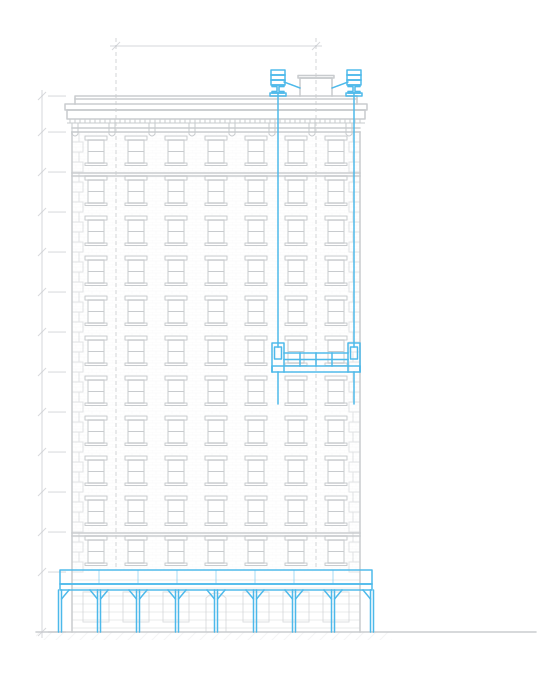
Upper floors reached from our own drops.
They're rigged under our own Special Rigger license.
What goes wrong with cast iron
- Rust. Once the paint fails, iron rusts quickly, and the porous rust holds water against the metal.
- Galvanic corrosion. Where iron touches copper or lead and water is present, the iron corrodes. Copper patches from old repairs can set it off.
- Failed joints and connections. Seams and bolt heads were caulked. When that caulking fails, water rusts the iron from the inside and can freeze and crack it.
- Cracks. Caused by casting flaws, settlement, impact or rusted bolts.
- Loss of anchorage. The connections into the masonry rust or let go, and pieces work loose.
How we work, following Preservation Brief 27
Cleaning. We start with test panels. Light rust and loose paint come off by hand scraping and wire brushing; heavy buildup or corrosion gets low-pressure abrasive blasting. Bare iron gets a rust-inhibiting primer right away.
Mechanical repairs. We tighten loose assemblies and replace rusted bolts and screws in stainless steel, a size up where the holes have corroded. Small non-structural cracks are patched with iron-filled epoxy. Brazing or welding is rare, and done by specialists.
Replacement. New iron castings where pieces are missing or too far gone, with substitutes only where your architect specifies them and LPC approves. Any section that goes to the shop is numbered and keyed to drawings first, then reassembled in its original order.
Source: National Park Service, Preservation Brief 27, The Maintenance and Repair of Architectural Cast Iron (John G. Waite, 1991), nps.gov/orgs/1739/upload/preservation-brief-27-cast-iron.pdf
Services and capabilities
01 Survey and approvals
- A survey of rust, joints, cracks and anchorage
- Paint sampling with a conservator to find the historic colors
- Methods, samples and mockups for your architect's LPC application
02 Restore
- Failed paint removed, then primer and finish coats
- Seams re-caulked with architectural-grade sealant
- Castings re-anchored to the masonry behind
- Iron separated from copper and other dissimilar metals
- Dismantling for shop repair, overseen by a preservation architect or conservator
03 Close out
- Documentation for LPC sign-off and your QEWI's FISP filing
- A maintenance plan for repainting and the joints
Signs your cast iron needs work
- Peeling or blistered paint with rust underneath
- Rust streaks below seams or bolt heads
- Open joints between castings
- Cracked or broken castings, or missing ornament
- Rust around copper flashing or old copper patches
The rules that apply
Landmarks. Exterior work on a landmark or in a historic district needs an LPC permit before it begins. Your architect files the application, and we supply the methods, samples and mockups behind it. Landmark restoration →
FISP (Local Law 11). On buildings greater than six stories, your QEWI inspects the cast iron along with the rest of the façade. Loose castings can be filed Unsafe.
Questions about cast iron
Should we strip all the paint off our cast iron?
Usually not. Preservation Brief 27 says loose paint, rust, dirt and grease must come off, but tightly bonded old paint can stay if it's compatible with the new coating. Leaving it keeps the building's paint history intact and disturbs less old lead paint.
Can cast iron be sandblasted?
Sometimes. The Brief describes low-pressure abrasive blasting for heavy paint buildup or corrosion, after test panels and with the surrounding materials protected. It warns against very high pressure and copper slag, and calls wet blasting more problematic. Lighter jobs need only scraping and wire brushing.
Can broken castings be replaced?
Yes. A small decorative piece can be cast using an intact original as the pattern. Larger sections need new patterns made slightly oversize, because iron shrinks as it cools. Small foundries can handle the small pieces; large or complex castings go to a specialist.
Can we use aluminum or fiberglass instead of iron?
The Brief covers aluminum, epoxy, fiberglass and GFRC as substitutes, and each has limits. Aluminum is weaker, and next to iron it can cause galvanic corrosion. Epoxy and fiberglass can't be structural. GFRC set against iron makes the iron corrode. We look at repair or new iron first, and on a landmark, LPC decides.
Why are concrete-filled columns a problem?
Concrete shrinks as it cures and leaves a gap where water sits against the iron, and its alkalinity speeds up corrosion. The Brief calls filling an inappropriate treatment. Filled elements may have to be taken apart, cleaned out, primed and put back together.
Cast iron across the boroughs
- Manhattan: SoHo, Tribeca and NoHo, where most buildings of seven or more floors sit inside historic districts.
- Brooklyn: Stoop railings, fences and storefront columns on the 19th-century blocks of Brooklyn Heights.
- Queens: Few cast iron fronts. Most of the iron is storefront columns and railings on older commercial streets.
- The Bronx: Railings, fences and storefront columns on pre-war apartment houses.
- Staten Island: Railings and fences on older houses in the island's three historic districts.
Let's talk about your building
Rust on your cast iron?
Send us photos of the whole façade and close-ups of the worst joints. We'll tell you what we see and what LPC will want to review.